American Made Lithium Ion Battery Manufacturers

Lithium batteries made in the USA: LiFePO4 drop-in batteries for RVs and boats, plus primary lithium cells, built in Nevada, Florida and North Carolina.

3 American companiesUpdated

Home › Electronics › Batteries › Lithium Ion Batteries

This page may contain affiliate links. Full disclosures

Lithium batteries store more energy in less weight than any other common battery. Rechargeable lithium iron phosphate (LiFePO4) batteries have become the upgrade of choice for RVs, vans, boats and off-grid cabins: they weigh about a third as much as lead-acid batteries, last thousands of cycles and can be drained almost completely without damage. Single-use primary lithium cells last 10 to 20 years on the shelf or in the field, so they power military radios, utility meters, sensors and trackers that can't be recharged.

Most lithium-ion cells are still made in Asia, so most American lithium battery companies design the battery management systems and build, wire and test the batteries here from imported cells. Battle Born does that in Reno, Nevada, and Lithionics in Clearwater, Florida. Saft goes a step further: its Valdese, North Carolina plant makes primary lithium cells from the chemicals up, in sizes from 1/2 AA to D. Each listing says what is made in the USA and where the cells come from.

See also battery packs, deep cycle batteries, battery chargers and solar.

More types in this section ↓

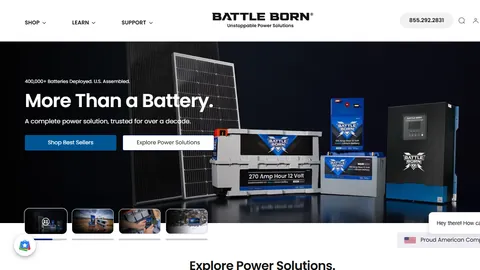
Preview of the Battle Born Batteries website

Battle Born makes lithium iron phosphate (LiFePO4) deep-cycle batteries that drop in to replace lead-acid batteries in RVs, boats, off-grid cabins, trucks and other mobile and stationary systems. They come in several sizes, including models with built-in heaters for charging in the cold and Dragonfly IntelLigence for real-time monitoring by phone. Battle Born also sells inverters and inverter/chargers, Wakespeed alternator regulators, solar panels, chargers and complete RV and marine power systems. The brand belongs to Dragonfly Energy, which now sells all its batteries under the Battle Born name.

Battle Born batteries are designed, assembled and tested in Reno. Battery packs are assembled largely by hand by trained employees, and Dragonfly had 141 employees at the end of 2025. Late in 2024 it moved into a 390,240 sq ft headquarters and plant in Reno, which raised its production capacity. It also assembles Battle Born packs under contract for Stryten Energy. Dragonfly is developing its own patented dry-electrode and solid-state cell manufacturing, though its batteries still use cells bought from outside suppliers.

Made in: Reno, NV (battery design, pack assembly and testing).

Imported: LiFePO4 cells from two cell makers in China; the battery management system, built to Dragonfly's design by a supplier in China.

Bought in: some third-party inverters, solar panels and accessories sold with its systems.

Source: Dragonfly Energy 10-K, 2026, checked 10/2026

Reno, NV
Visit website
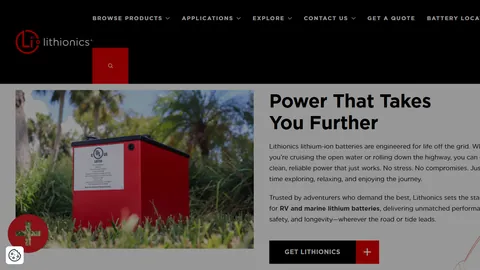
Preview of the Lithionics Battery website

Lithionics makes LiFePO4 lithium-ion battery systems for "house power" in RVs, vans and boats, and for workboats, fleet and specialty vehicles, low-speed electric vehicles, amusement park rides, cell towers and renewable energy. Its batteries come in standard and custom sizes, including high-capacity and modular platforms with plug-and-play wiring for RV and marine builders. Lithionics also sells its NeverDie battery management systems, smart alternators, chargers and power converters, and accessories. Its customers include Winnebago and Newmar, which build its batteries into their RVs at the factory.

Lithionics was founded in 2008 and says it was the first American company to meet the UN DOT 38.3 transportation safety standard for lithium batteries. It designs its battery management systems and firmware in-house and builds its batteries in its Clearwater factory, on assembly equipment it designed and built itself. Winnebago Industries bought Lithionics in 2023 and runs it as its own business segment.

Made in: Clearwater, FL (engineering, BMS and firmware design, battery assembly).

Bought in: lithium cells.

Source: Lithionics about us, 2026 · Winnebago 10-K, 2026 · Winnebago Industries, 2023, checked 10/2026

Clearwater, FL
Visit website
Preview of the Saft website

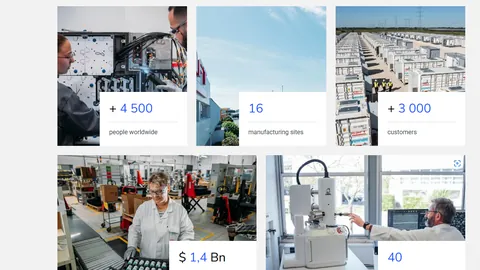
Saft, owned by TotalEnergies since 2016, makes lithium cells and batteries for defense, space, aviation, utility meters, IoT devices and grid energy storage. Its primary (non-rechargeable) lithium cells come in standard sizes from 1/2 AA to D: LS and LSH lithium thionyl chloride cells for meters, sensors and trackers that must run 10 to 20 years, LO lithium-sulfur dioxide cells for military radios, GPS and night-vision gear, and LM lithium manganese dioxide cells. Its rechargeable lithium-ion cells and batteries power satellites, the F-35 fighter, Formula One cars and military vehicles, and its I-Shift lithium-ion containers store power for utilities. Saft also makes nickel-cadmium batteries for aircraft, trains and telecom backup, and has 16 manufacturing sites worldwide.

Saft America has worked in the US for more than 50 years. It made Valdese, North Carolina its center for Li-SO2 and Li-SOCl2 cells after buying Duracell's business-to-business battery operations there in the late 1980s. The plant quadrupled in size to supply US forces during Desert Storm, and it added Li-MnO2 cells for utility meters in 2012. Cockeysville, Maryland is Saft's US research center and develops and builds lithium-ion cells and batteries for space, defense and racing. Jacksonville, Florida opened in 2011 to make lithium-ion batteries and began building lithium-ion energy storage containers on a new line in 2024. Valdosta, Georgia, open since 1975, builds aviation, rail and telecom batteries.

Made in: Valdese, NC (primary lithium cells: Li-SO2, Li-SOCl2 and Li-MnO2); Cockeysville, MD (lithium-ion cells and batteries for space, defense and racing); Jacksonville, FL (lithium-ion energy storage containers); Valdosta, GA (nickel-based aviation, rail and telecom batteries).

Imported: many Saft cells and batteries, including parts of its LS lithium cell range, come from its plants in France and other countries.

Bought in: some parts for the Jacksonville containers (Saft is raising US content step by step).

Source: Saft America: half a century in the US, 2018 · Saft Valdese job posting, 2026 · Saft Valdosta 50 years, 2025 · Energy-Storage.news · WMAR Cockeysville, 2017, checked 10/2026

Valdese, NC
Saft Batteries at Walmart (affiliate links)
Visit website

Lithium battery makers by state

  • Florida: Lithionics (Clearwater), LiFePO4 batteries for RVs, boats, specialty vehicles and cell towers
  • Nevada: Battle Born Batteries (Reno), LiFePO4 drop-in batteries and power systems for RVs, boats and off-grid homes
  • North Carolina: Saft (Valdese), primary lithium cells for defense, utility meters and IoT devices

Types of lithium batteries

Lithium iron phosphate (LiFePO4) is the safest and longest-lasting lithium chemistry. It is the standard for RV, marine, golf cart and off-grid batteries and often comes as a drop-in replacement for lead-acid batteries.

Lithium-ion (NMC and NCA) packs the most energy into the smallest space. It powers phones, laptops, power tools, electric vehicles, satellites and aircraft.

Lithium thionyl chloride (Li-SOCl2) primary cells deliver 3.6 volts and last up to 20 years. They are used in utility meters, alarm systems, trackers and industrial sensors.

Lithium-sulfur dioxide (Li-SO2) primary cells handle high power in extreme cold and heat, and they are used in military radios and equipment.

Lithium manganese dioxide (Li-MnO2) primary cells power meters, medical devices and cameras, and come in sizes from coin cells to D cells.

Heated lithium batteries warm themselves before charging, because lithium can't be safely charged below freezing.

Choosing a lithium battery

  • Decide between rechargeable and primary. LiFePO4 suits RVs, boats and solar systems that cycle daily, and primary lithium suits devices that must run for years without service.
  • Size the battery in amp-hours to your daily use, remembering that lithium can use nearly its full rated capacity.
  • Check the battery management system: overcharge, overdischarge, temperature and short-circuit protection, plus phone monitoring if you want it.
  • Plan for cold weather. Choose a heated battery if it will charge below freezing.
  • Match your charger, alternator charging and solar controller to lithium, or upgrade them.
  • Compare warranties of 10 years or more, and make sure the maker services its batteries in the US.

Reading "Made in USA" on lithium batteries

Under FTC rules, an unqualified "Made in USA" claim means all or virtually all of the product is made here. Almost all lithium-ion and LiFePO4 cells, the most valuable part of a rechargeable lithium battery, are made in China, Korea or Japan, so most American lithium batteries are designed and assembled here from imported cells. A few makers, such as Saft's primary lithium plant, make the cells themselves. "Built in USA" on a lithium battery usually means the case, wiring, battery management system and testing are American, so ask where the cells were made.

Know a USA-made company we missed?

If a company makes its products in the USA and is not listed, send us its website.

Add your site

Disclosures

Company names, logos and website previews belong to their owners and appear here only to identify the companies listed. If you own a listing and want an image changed or the listing removed, please contact us.

This site takes part in the Amazon Associates program and other affiliate programs, so some links earn us a commission at no extra cost to you. As an Amazon Associate I earn from qualifying purchases.

* This site does not have any relationship, business or personal, with any of the manufacturers listed. Our only affiliations are with the affiliate programs described above.

A company may be based in the USA while making some products elsewhere. Check the manufacturer's own site for where a specific product is made.